
Investment Highlights
- Vertically integrated business model: From the mining of natural graphite flakes to the recycling of used anodes, EcoGraf covers the entire value chain of battery anode materials.
- Patented technology: HFfree® purification completely eliminates hydrofluoric acid, reduces costs and emissions, and achieves purity levels of up to 99.99% carbon.
- Strategically significant resource: The Epanko Project in Tanzania is one of Africa’s largest development-ready graphite deposits and meets international ESG standards.
- Tanzania’s location advantage: Access to affordable, low-carbon hydropower and growing industrial infrastructure offers ideal conditions for sustainable graphite production.
- Global relevance: Independence from Chinese supply chains strengthens supply security for Western battery manufacturers.
- Strong ESG focus: Commitment to local development, training, and social infrastructure combined with environmentally friendly production.
Company & Strategy
EcoGraf Ltd. (ASX: EGR / FSE: FMK) is an Australian company building a fully integrated value chain for battery anode materials. At its core is the vision to provide high-quality, environmentally friendly graphite products for the global lithium-ion battery industry.
The company has already invested over US$30 million in a structure that covers the entire lifecycle of anode material – from mining and processing to recycling. Through this integration, EcoGraf creates a robust foundation to retain value creation in-house while reducing the dependence of Western industries on Chinese supply chains.
A central element of the strategy is the HFfree® technology, a purification process developed and patented by EcoGraf that completely eliminates hydrofluoric acid (HF). This process significantly reduces production costs and environmental impact and allows for the production of graphite with purity levels of up to 99.99% C. It is used in both primary production and the recycling of anode material.
EcoGraf’s long-term goal is to build a global network of production and processing facilities strategically located near the key battery and electric vehicle markets in Asia, Europe, and North America.
Market Environment
Graphite – Key Raw Material for the Energy Transition
Graphite is the dominant material in the anode of lithium-ion batteries, accounting for almost half of all battery minerals used. With the rapid growth of e-mobility and stationary energy storage, the demand for high-purity graphite is increasing significantly. Analysts predict that the demand for battery graphite will multiply in the coming years.
Strategic Realignment of Western Supply Chains
The graphite market is currently dominated by China, especially in chemical purification based on hydrofluoric acid. However, geopolitical tensions, export restrictions, and new regulations such as the EU Critical Raw Materials Act are leading to a massive re-evaluation of global supply chains.
EcoGraf positions itself with its HFfree® technology as an environmentally friendly, non-Chinese alternative and is already recognized as a “Priority Project” within the EU Raw Materials Initiative.
Tanzania’s Location Advantage
Tanzania is one of the most resource-rich and politically stable countries in East Africa. With the government program for industrialization and infrastructure expansion – for example, through the Julius Nyerere Hydropower Plant with 2,115 MW capacity – a favorable environment for energy-efficient, low-carbon production is emerging. The government actively supports the raw materials sector through investment partnerships and clear legal frameworks.
Project Portfolio
Epanko Graphite Project (Upstream)

Fig. 1: Location of the Epanko Project in Tanzania
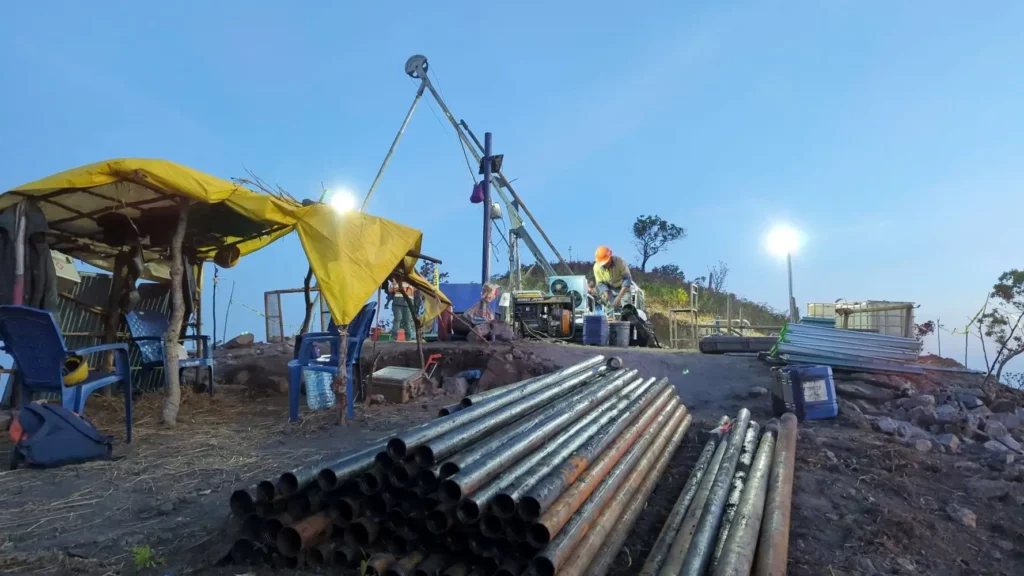
The Epanko Project forms the basis of EcoGraf’s strategy. It is located approximately 370 kilometers west of Dar es Salaam in the Mahenge region and is considered one of Africa’s most significant graphite deposits. The resource is of high quality and has a carbon content of up to 98% C.
A comprehensive Bankable Feasibility Study, conducted by SRK Consulting (UK), confirms the project’s economic viability and high ESG standards. In the first phase, a production of 73,000 tonnes of graphite concentrate per year is planned, with the option to expand capacity to over 300,000 tonnes if demand increases.
Epanko complies with the Equator Principles and IFC Performance Standards and has been positively evaluated by international financial institutions – including KfW IPEX-Bank. Over its planned operational life of more than 40 years, the project is expected to generate over US$3 billion in direct economic benefits for Tanzania, primarily through local employment, procurement, taxes, and duties.
Already, 95% of the 300 permanent jobs are to be filled by Tanzanian skilled workers. Additionally, an estimated 4,500 indirect jobs will be created in supplier companies and the service sector.
Ifakara Mechanical Shaping Facility (Midstream)
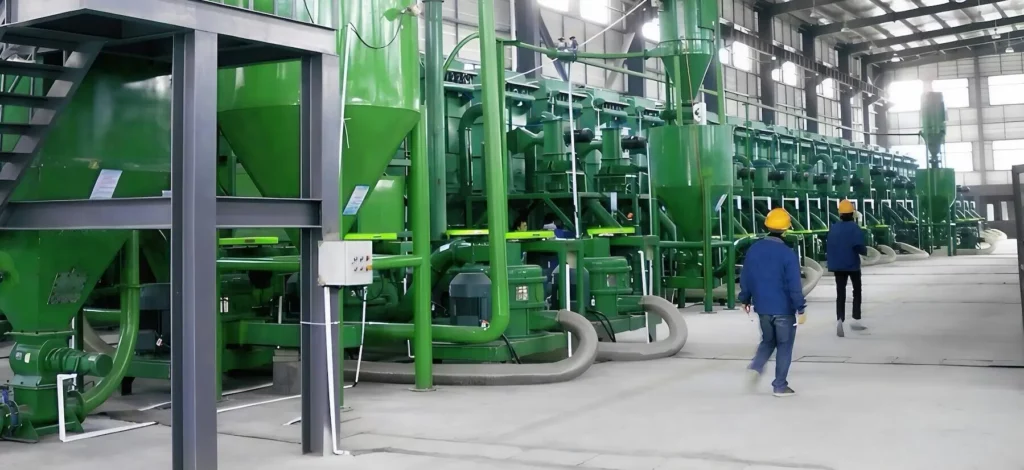
Fig. 2: Technical facility of the shaping process
Approximately 75 kilometers from Epanko, a modern mechanical shaping facility is being built in Ifakara, where natural flake graphite is processed into spherical graphite (SpG) – the crucial precursor for batteries. The process includes micronization and spheronization, giving the material higher density, better conductivity, and improved charging properties.
The facility will be powered entirely by renewable hydropower. Road and rail connections, as well as proximity to the port of Dar es Salaam, ensure efficient logistics and short transport routes.
With a planned annual capacity of 20,000 tonnes of SpG, this will be one of the first industrial graphite processing facilities of its kind in Africa.
In addition to high in-country value creation, the project contributes to regional development and supports Tanzania’s strategy to process raw materials locally instead of exporting them unprocessed.
HFfree® Purification Facilities (Downstream)

Fig. 3: Process plant for HFfree® purification
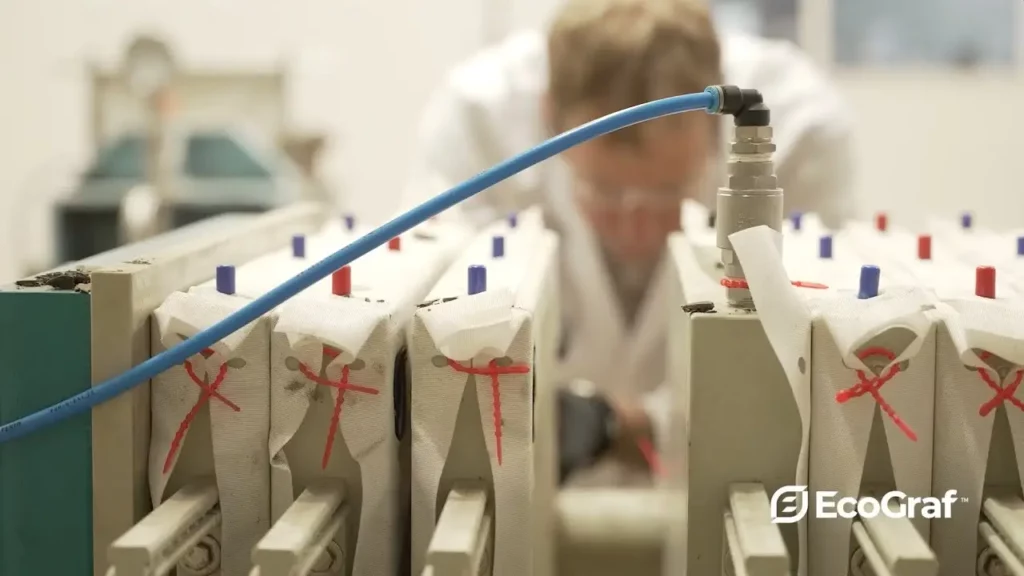
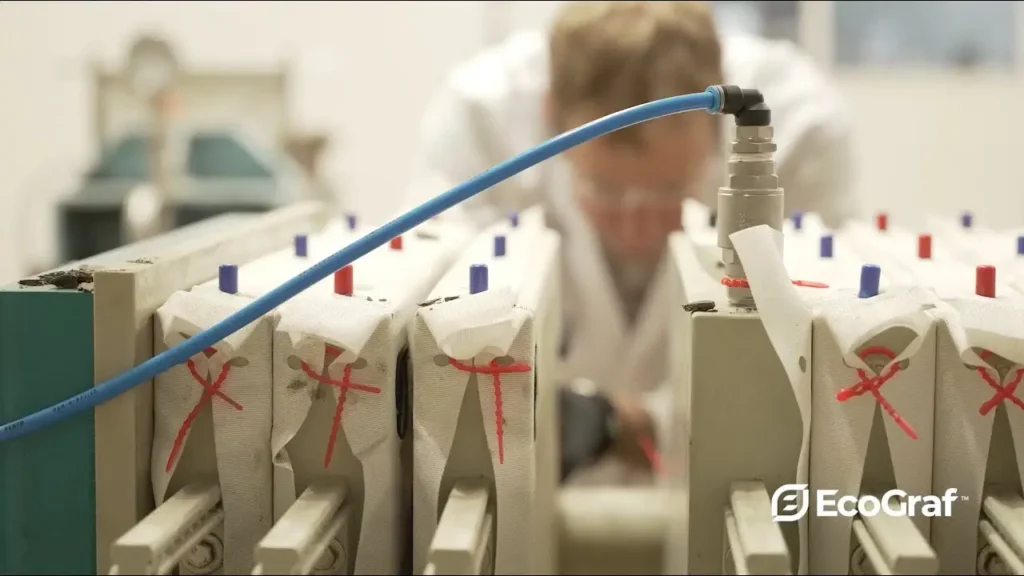
EcoGraf is developing global Battery Anode Material (BAM) production based on its proprietary HFfree® technology. This innovative method enables chemical-free purification of spherical graphite to 99.95% to 99.99% C and completely replaces conventional HF-based processes.
For technical validation, a Product Qualification Facility (PQF) was established in Perth (Australia). This pilot plant operates continuously and provides both technical data for scaling and product samples for potential customers in Europe, North America, and Asia.
The purification technology is protected by international patents and will be used in multiple regional production centers close to customers in the future – a crucial factor for supply chain stability and eligibility for government funding.
Independent benchmark studies show that EcoGraf’s process has up to 34% lower operating costs than conventional methods. Furthermore, CO₂ emissions are significantly reduced – a significant advantage given the increasingly stringent environmental regulations in battery production.
Anode Recycling (Recycle)
EcoGraf consistently pursues the goal of a closed-loop economy. With the application of HFfree® technology to recycled anode material, graphite from production waste and used batteries is recovered and reintroduced into the production cycle.
The research results – including in cooperation with the Helmholtz Institute Freiberg and the Helmholtz Institute Ulm – confirm the suitability of the process for recycling battery materials. Energy consumption is low, and CO₂ emissions are only about 1.6 to 2.2 kg CO₂ per kg of graphite.
Thus, EcoGraf makes an important contribution to the decarbonization of the battery industry and at the same time meets the increasing legal requirements for closed material cycles in the EU and the USA.
Golden Eagle Gold Project
In addition to its graphite business, EcoGraf also holds exploration rights for gold, nickel, and lithium deposits in Tanzania. The Golden Eagle Project in the Lake Victoria Goldfields area is being developed jointly with AngloGold Ashanti.
AngloGold can acquire up to 70% of the property through a five-year farm-in agreement by investing US$8.9 million in exploration. The project is located in close proximity to the high-grade Winston deposit (16 m @ 55.23 g/t Au) and offers additional diversification potential for EcoGraf.
Outlook
EcoGraf is on the verge of commercial production. With the ongoing financing process of the Epanko Project and the continuous technical validation of HFfree® technology, the company will achieve the operational implementation of its vertically integrated structure in the coming years.
Key milestones for the next phase include:
- Completion of project financing for Epanko in cooperation with international banks and export credit agencies,
- Start of construction of the Ifakara facility and commencement of SpG production,
- Commercialization of HFfree® purification on an industrial scale,
- Expansion of strategic partnerships with battery and automotive manufacturers,
- Establishment of initial recycling pilot projects in Europe or the USA.
With this development, EcoGraf could become a key supplier to Western battery industries – technologically independent, ecologically advanced, and economically sound.
Management
EcoGraf’s leadership team combines many years of experience in mining, raw material financing, and technology development.
- Robert Pett, Chairman, is an experienced mineral economist with over 30 years of activity in Africa and Australia. He was the founding Chairman of Resolute Mining Ltd. and oversaw the development of several mining projects, including the historic Golden Pride Mine in Tanzania.
- Andrew Spinks, Managing Director, has over 25 years of experience in the development of industrial and specialty mineral projects. He is a co-founder of TanzGraphite Pty Ltd and has led EcoGraf since its acquisition.
- John Conidi, Non-Executive Director, is a Certified Practicing Accountant with extensive experience in company building and technology investments.
- Keith Jones, Non-Executive Director, former Chairman of Deloitte Australia, brings over 40 years of expertise in corporate finance, valuation, and governance in the raw materials sector.
The management combines technical expertise, operational experience, and financial competence – crucial factors for the successful transition from the development to the production phase.
Conclusion
EcoGraf Ltd. exemplifies the new generation of sustainable raw materials companies: technologically innovative, ecologically responsible, and socially committed.
With the Epanko Project as its foundation, HFfree® technology as a distinguishing feature, and a clear vertical integration strategy, the company creates a closed value chain – from mine to recycling.In a market increasingly shaped by supply chain risks, geopolitical tensions, and ESG requirements, EcoGraf positions itself as a strategic partner for the global battery and electric vehicle industry.
The company combines economic efficiency, environmental compatibility, and social responsibility – a combination that is likely to be crucial in the evolving raw materials landscape.