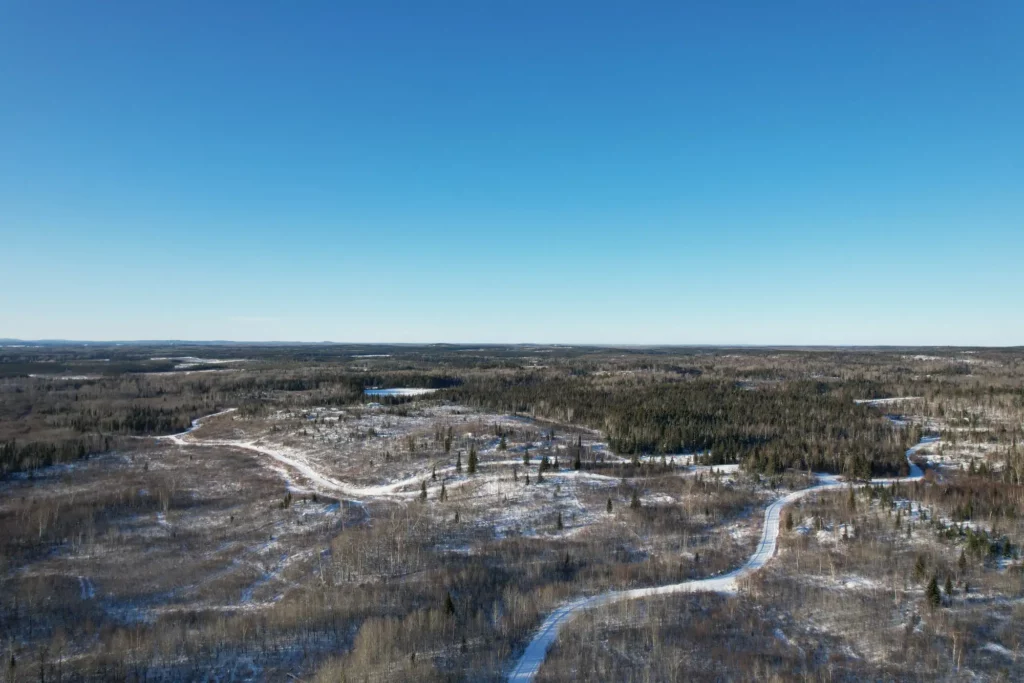
Canadian exploration company Gold Hunter Resources (CSE: HUNT | WKN: A2QPAL) s applying its district consolidation playbook to one of Canada’s most prospective gold regions. Under the strategy “HUNT 2.0,” Gold Hunter has assembled and controls entire geological corridors rather than advancing isolated individual projects.
This is not a theoretical construct but is based on a value creation success that has already been realized. The FireFly transaction – resulting from the consolidation around the former Rambler/Ming area – led to a value realization of over CAD 48 million for shareholders. For investors, this step is one thing above all else: a robust proof of concept for the management team led by CEO Sean Kingsley, which has already demonstrated its ability to identify undervalued assets and leverage them strategically.
From Individual Project to District Strategy
At the heart of the new corporate strategy is the Great Northern Project on the Great Northern Peninsula in Newfoundland. The project is the result of an extraordinary consolidation effort: for more than 40 years, the area was blocked by fragmented claim structures. Different owners, small claim packages, and a lack of strategic coordination prevented systematic exploration of the entire gold system.
Gold Hunter succeeded in resolving this structural weakness. Through an option on the claims of Magna Terra Minerals and targeted purchase agreements with a total of twelve parties, a contiguous project area of 26,237 hectares was created. Only this consolidation makes it possible to analyze the geological structures without artificial boundaries and to assess the full potential of the district. For institutional investors, this step is crucial: district size and structural control are key prerequisites for subsequent resource definition, scalability, and M&A relevance.

The Doucers Valley Fault as the geological backbone
Geologically, the Great Northern Project is dominated by the Doucers Valley Fault – a regional fault system of considerable size. Such crustal structures are considered primary transport channels (“plumbing systems”) for orogenic gold deposits. Gold Hunter now controls over 35 kilometers of strike length along this main fault.
However, the numerous branching secondary structures are even more relevant to the exploration potential. Over 50 kilometers of mineralized splay and veins have been identified to date. The district includes a past-producing area from the early 1900s, known as the Browning Mine, along with 18+ zones with gold mineralization identified to date, including Thor, Road, Apsy, and Beaver Dam. This structural architecture corresponds exactly to the type of gold systems that have produced multi-million-ounce deposits in comparable jurisdictions.
An important aspect for investors: the mineralized zones modeled to date are open at depth and along strike. The Thor zone, for example, is currently only drilled to a depth of approximately 200 meters. Historically, there has been a lack of opportunity to systematically pursue these structures – a deficit that Gold Hunter is now addressing.
Benchmark: Valentine as a Blueprint
To assess the potential, it is worth taking a look at the Valentine gold project, which is also located in Newfoundland, achieved its first gold pour in the third quarter of 2025, and declared commercial production on Nov 18, 2025. Both projects share an almost identical geological environment: Proterozoic granites and sediments controlled by large-scale shear zones with mineralized secondary structures.
While Valentine currently has a structure-controlled strike length of around 30 kilometers, the Great Northern project is already comparable in size – but is at a much earlier stage of exploration and development. For investors, this results in a classic asymmetric opportunity profile: high exploration potential at a comparatively low market valuation, coupled with the typical risks of early project phases.
Technology-Driven Exploration and Data Integration
A central element of the HUNT 2.0 strategy is the use of modern exploration methods. In October 2025, a district-wide VTEM/magnetic airborne survey was completed for the first time across the entire project area. This survey makes it possible to identify subtle and discrete structures even under surface cover – a decisive advantage in an area with historically limited data depth and lacking property-wide coverage.
In collaboration with Windfall Geotek, this new data is being combined with extensive historical datasets, including over 66,000 meters of drilling, along with an extensive amount of other data layers. Machine learning algorithms are used to prioritize potential target zones by “fingerprinting” mineralization and then identifying that fingerprint through all the layers of data, creating a greater refinement of the target rapidly. The aim is to systematically reduce exploration risk and focus future drilling programs on those structures with the highest discovery potential.
Capital Structure and Financing
The new strategic direction is also reflected at the financial level. The monetization of FireFly shares raised CAD 3.7 million in non-dilutive capital. Among other things, these funds were used to finance the Magna Terra option, expand the original project with additional consolidation, and deposit collateral in lieu of exploration work.
This was followed in February 2026 by a capital increase of CAD ~6.75 million (flow-through and hard dollars), which is considered the starting signal for the planned drilling program. Gold Hunter’s shareholder structure is noteworthy: according to the company, as of the end of last year, over 60% of the shares were in the hands of management, strategic partners,
Newfoundland as a Strategic Jurisdiction
According to the Fraser Institute, Newfoundland is one of the world’s most attractive mining jurisdictions. Infrastructure, legal certainty, and political stability meet a geologically underexplored environment here. In recent years, there have been several billion-dollar transactions, including the acquisition of Marathon Gold by Calibre Mining, which subsequently merged with Equinox
Gold Hunter is positioning itself as a potential consolidation candidate in this environment. Control of a contiguous gold district along a major regional structure is exactly the profile that larger producers are looking for as part of their long-term resource strategy.
Outlook and Potential Catalysts
Several operational milestones are planned for 2026: the start of a large-scale drilling program with up to 10,000 meters to expand known areas, drill test new regional discovery-focused targets, potential resource updates for existing zones and the necessary capital and time to expand and follow up on any positive outcomes from these drill targets. Historical estimates, such as those for Rattling Brook, will be reviewed in accordance with current standards and updated if necessary.
From an investor perspective, Gold Hunter is thus marking the transition from pure project consolidation to the phase of active value realization. Ultimately, drilling is expected to determine whether the full potential of the Great Northern Project is confirmed, which, of course, entails the usual risks of the exploration sector. However, the structural, geological, mineralogical and strategic conditions appear to be favourable in our opinion.