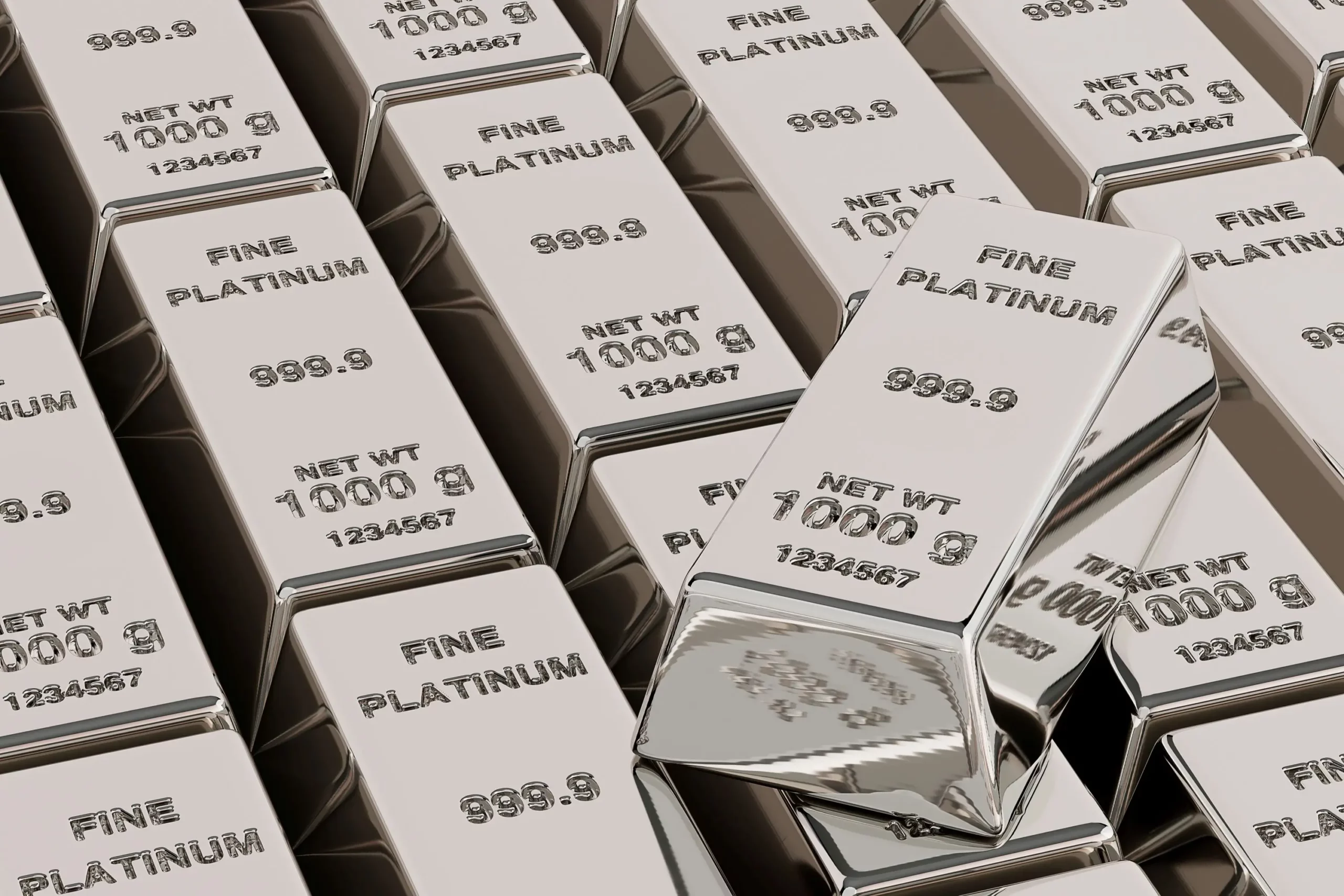
Platinum group metals are currently – to put it mildly – not among the most sought-after investments. The same applies to the companies that mine them. However, this low interest is based on false assumptions. Adam Rozencwajg, Managing Director, explains what these are and why the experts at Goehring & Rozencwajg are betting on these metals and companies right now in his latest commentary.
One has to look quite far back to find a time when platinum, palladium, and rhodium – the platinum group metals (PGMs) – garnered significant attention from investors. It has been a full twenty years since we ourselves were invested with significant positions in PGM companies.
In the late 90s, PGMs were a group of little-noticed metals, and there was a handful of mining company stocks with prices beyond irrelevance. That was precisely the right time to get in. And indeed: Between their low point in the late 90s and the 2008 financial crisis, the shares of South Africa’s Rustenburg Platinum (now Anglo American Platinum) and Impala Platinum – in dollar terms – rose by 30 and 60 times, respectively.
Automotive Industry Remains Key Sector for Platinum Group Metals
Why this historical digression? We are currently seeing a very similar situation in the market. For sixteen years now, platinum has been in a bear market, and the palladium price has been falling almost continuously for four years. The persistent belief is that due to the shift to electric mobility, the demand for catalysts is steadily decreasing, possibly to zero in the medium term – and 65 percent of all produced PGMs are used for this. The shares of PGM mining operators have also declined, by a full 80 percent since their peak about three years ago.
So, there is a lot of pessimism in a market for which we see ample upside potential. Central to this is not the end, but rather a plot twist in the success story of electric mobility. Industry analysts are beginning to consider a more nuanced scenario – one in which internal combustion engines can still see significant growth well into the 2030s. Analyses – for example, by Rob West of Thunder Said Energy – foresee a market for a consistent approximately 90 million new internal combustion engines annually until at least 2033. This approaches the values of the late 2010s with 95 million units annually – only interrupted by the Corona pandemic with 75 million sales in the year.
A Technical Detail in Hybrid Drives could Drive up the PGM Market
In addition, there is a technology that requires even larger quantities of PGMs than internal combustion engines – and has long moved out of its niche: hybrid powertrains. The significant efficiency advantage of hybrids could further increase interest in them. A technical detail necessitates up to one gram more PGM per vehicle. Because while the engine in internal combustion vehicles runs continuously, keeping the catalytic converter at optimal temperature, the lack of continuity from a hybrid’s frequent on-and-off cycles requires a larger quantity of PGMs.
And another development in the mobility sector is likely to further drive demand for PGMs: Governments worldwide are enacting increasingly stringent emission standards. Whether it’s the upcoming EU7 standard in Europe, the CN7 directive in China, or the Bharat Stage 7 in India – all of them necessitate more efficient catalytic converters.
Currently, 18.7 million ounces of platinum, palladium, and rhodium are needed per year. In addition to the 65 percent for the automotive industry, approximately 10 percent goes into jewelry and investment, 9 percent into chemical applications, 8 percent into electronics and glass, and 3 percent into the medical sector. But – here again, we rely on Rob West and his analysis – demand could rise to nearly 23 million ounces by 2032. That would be an increase of a full 23 percent and a development that, in our opinion, has been severely underestimated by the market so far.
A Deficit Already Exists in the Market
There is already a deficit in the market for palladium and platinum today. After a deficit of 750,000 ounces in 2023 and a deficit of 680,000 ounces in 2024 – figures that account for almost nine percent of global total demand – the platinum market is now facing its third consecutive year of undersupply. According to estimates by the World Platinum Investment Council, the deficit in 2025 will be approximately 500,000 ounces.
Production in South Africa decreased by approximately 400,000 ounces last year. However, the supply from catalytic converter recycling also decreased by approximately 300,000 ounces in 2024. Cars are being driven longer, especially in the USA. Furthermore, a future US directive will require automakers to install alcohol detection systems in new cars starting in 2026 – which is likely to further increase demand in the used car market and reduce the supply of recycled catalytic converters.
Slight Recovery for Platinum as an Investment
Of course, it is also true that demand for physical platinum as an investment product has decreased by 75 percent since 2020 – a development that can primarily be seen in platinum ETFs. From its peaks in 2019 and 2020, the holdings of bars and ETFs in the investment sector have fallen from 1.3 and 1.6 million ounces, respectively, to approximately 400,000 ounces in 2023 and 2024. We observe sixteen platinum ETFs and have noted that fewer positions are being liquidated, while more physical metal is being purchased again. For us, this is an initial sign that investor demand for platinum is also increasing again.
The Supply Side Remains under Pressure
Nevertheless, many analysts consider a surplus in the platinum market likely from 2026 onwards. However, this would require supply from recycling to improve again and investment demand to remain low. We, on the other hand, assume that the supply side will remain under pressure – especially since approximately 40 percent of global PGM deposits are currently unprofitable. Platinum production in South Africa has decreased from 4.5 million ounces in the early 2020s to 4 million, and palladium production has fallen from 2.7 million to 2.3 million ounces. In Canada, Impala Platinum is considering closing the Lac des Iles mine, which annually provides approximately 4 percent of global palladium production.
Meanwhile, only one new significant production is planned: Starting in the fourth quarter of 2025, approximately 50,000 ounces each of palladium and platinum are expected to be produced annually at the Platreef mine, on the eastern edge of the Bushveld Complex in South Africa. By 2033, the production volume of both metals is expected to increase tenfold. Even according to our conservative estimates, the market could easily absorb these quantities by 2035 – without any major impact on the price.
Best Conditions for a Bull Market
Robust demand, declining supply with a persistent deficit – the foundations for a bull market are laid. Added to this is an investment consensus that, in our opinion, will not hold, namely that industrial demand for platinum is expected to decline. We are firmly convinced that now is the best time to invest in PGMs – and in the companies that produce them.
About Goehring & Rozencwajg Associates LLC
Goehring & Rozencwajg is a natural resource investment firm that identifies value in commodities through proprietary research and a contrarian investment philosophy. With over 45 years of experience in commodity investing, Goehring & Rozencwajg aims for top-quartile performance relative to its peer group over a three-to-five-year time horizon. The firm currently manages $750 million on behalf of its clients.
More info about Goehring & Rozencwajg at: www.gorozen.com
Disclaimer:
This press information does not constitute investment advice. Past performance is not an indicator of future performance. The value of investments and the income derived from them can both rise and fall and is not guaranteed. The investor may not get back the amount invested. Portfolio characteristics and holdings are subject to change without notice. The views expressed are those of the author at the time of publication, unless otherwise stated, and do not constitute investment advice.