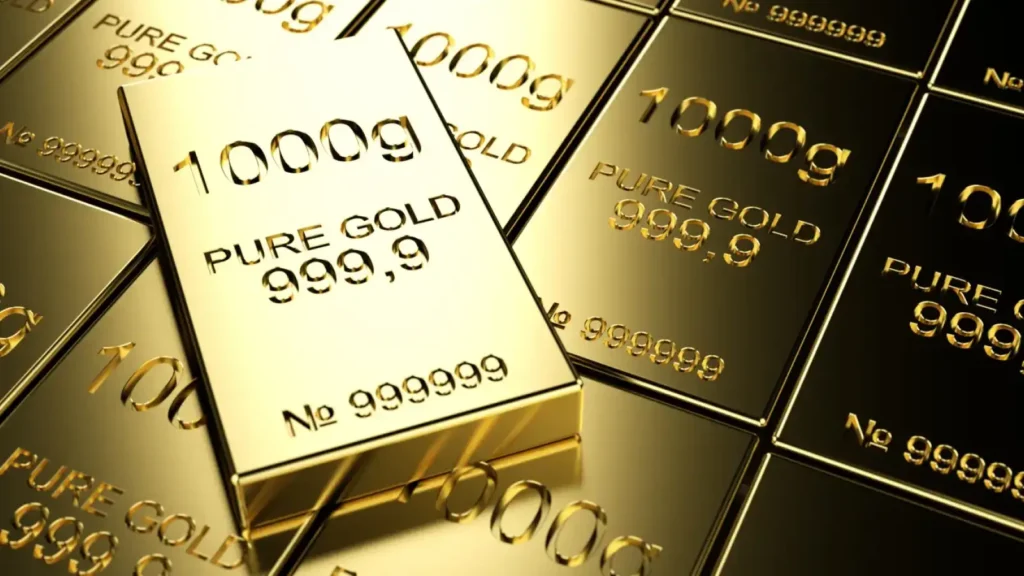
The year 2026 is only a few days old. Not even a full month has passed, and yet the silver price can already look back on a remarkable annual performance. On January 14, the silver price in New York broke the 90 US dollar mark per fine ounce for the first time. This continued the steep rally of recent weeks unabated.
On the trading floors in Shanghai and Dubai, where, unlike in London and New York, mainly physical silver is traded, the threshold of 90 US dollars per ounce had already been exceeded at the beginning of January, and thus much earlier. This discrepancy is no coincidence, because while in Asia physical demand determines the price, the western stock exchanges are still trying to stop the rally with a wealth of paper silver.
In the last days of December, the margin requirements on the COMEX had been raised sharply twice in quick succession. This made it possible to push short-term traders who had bet on a rising or falling price out of the market. This led to the long red candles that characterize the last days of December in the chart today. However, the measure could not permanently stop the rise in the silver price.
It is not the speculators who are currently driving the silver price and the COMEX before them.
Today, the days around the turn of the year appear like a last opportunity to buy silver cheaply, because starting from the year-end price of 2025 at 71.54 US dollars, the silver price in January almost only knew the way north and every little correction was immediately bought again.
Due to the increase to 90 US dollars, which was completed on January 14 in Asian and European trade, the buyers from December 31 made a profit of 18.46 US dollars per ounce or 25.8 percent in just two weeks, if purchased exactly at the closing price of the past year and sold again at 90.00 US dollars.
This is impressive and becomes even more impressive when you consider that silver in 2025 had already recorded a price increase of 146.7 percent by December 31, while gold at the same time “only” increased by 66 percent. A similar discrepancy was observed in platinum and palladium last year. But while palladium “only” increased by 81.5 percent, the platinum price recorded an increase of 128.7 percent.
The physical scarcity is the decisive price driver.
Platinum and palladium are very similar and can be used as substitutes in many places. Nevertheless, platinum rose significantly more in 2025 than palladium. The reason, similar to the comparison of gold and silver, is not only the physical needs of the industry, but the scarcity of supply. There is currently enough gold and palladium, while platinum and silver are scarce because the production of the mines cannot cover the current demand and the existing stocks cannot be emptied endlessly.
As long as this physical scarcity does not end, there is not much to suggest that the prices for silver and platinum will return to their former levels permanently in the long term. In the short term, the market can be shaken at any time by sharp price declines. However, it is to be expected that these price declines will immediately call buyers to the scene, who either urgently need silver or platinum for their production or who absolutely want to own the precious metals as a physical investment.
They will perceive these corrections as buying opportunities and seize them before others do. Therefore, the way back into deeper price regions should be blocked for the time being.
If the silver price from now on no longer rises or falls, but remains at its current level and closes the year 2026 exactly at 90.00 US dollars on December 31, many investors should be disappointed by the further course of the year 2026. But no one would have reason to complain about a poor annual performance of 25.8 percent.