


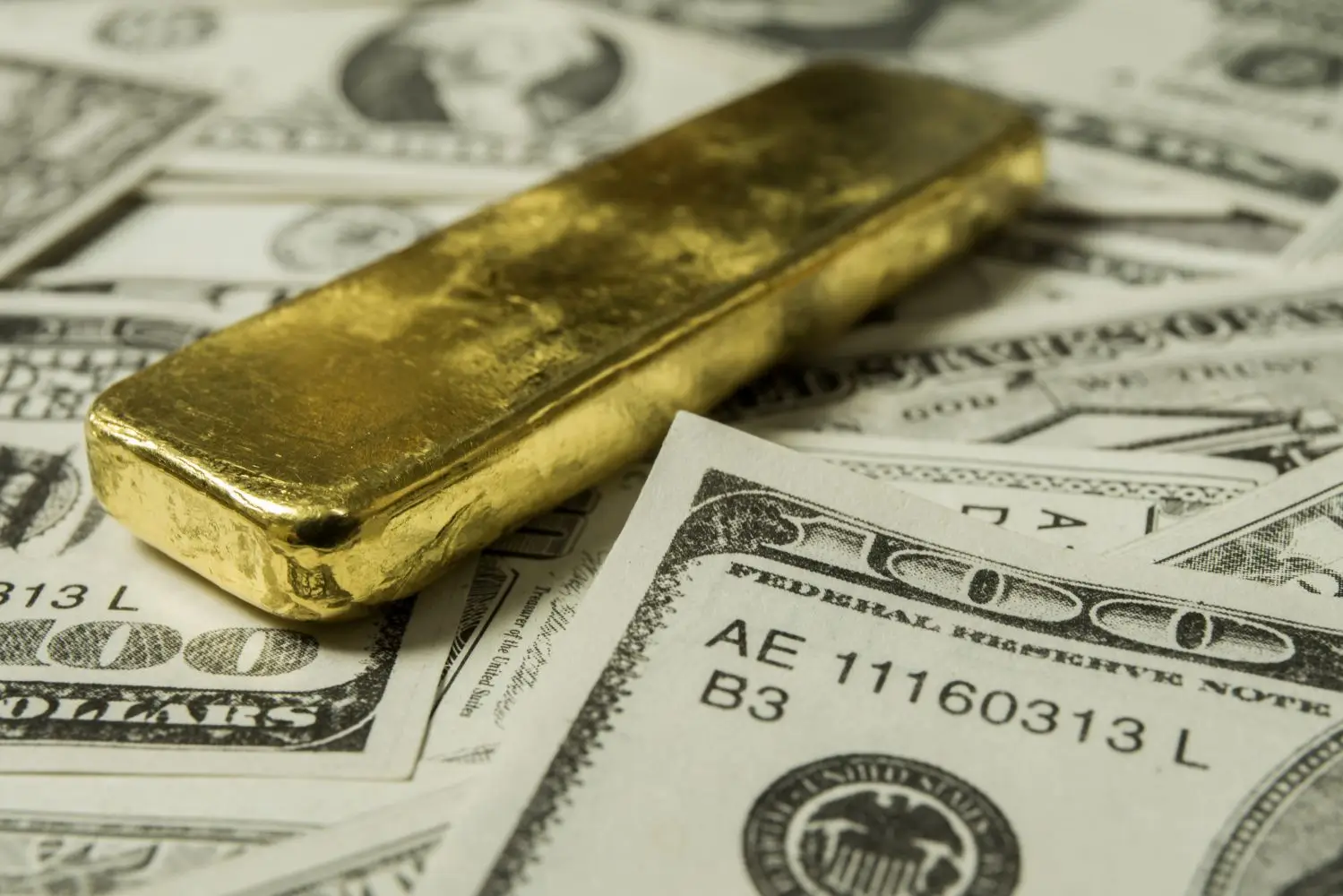

The gold price continued to fall at the start of the week, even if the pace of the downward movement has slowed down a little. However, the major US bank J.P. Morgan remains optimistic about the precious metal in its assessment despite everything.
In an analysis published late on Sunday, the bank stated that sustained demand from central banks and investors could drive the gold price to $6,300 per ounce by the end of the year, despite all the turbulence. Just a few days ago, the gold price reached a record high of $5,594.82 on Thursday.
The price range within a few trading days underscores the extraordinary volatility that currently characterizes the precious metal market. While short-term profit-taking and technical factors can explain the pullback, J.P. Morgan argues that the overarching trend could continue for structural reasons. The bank points to continued diversification in global reserves and the attractiveness of real assets.
Gold price in focus: Central banks as structural buyers
For J.P. Morgan, a long-term mechanism is paramount for gold: central banks and large investors are expected to provide the market with a solid demand base. The bank note speaks of a “clean, structural and continued diversification trend” which, in the strategists’ view, has not yet been exhausted. Behind this is the assumption that parts of global capital flows and reserves will continue to shift towards real assets – and gold will benefit from this.
The bank becomes correspondingly specific about the expected purchases: J.P. Morgan forecasts gold purchases by central banks of 800 tonnes for 2026. This is justified by a continuing, “unexhausted” tendency towards reserve diversification. Such a demand component is therefore relevant for the gold price because central banks typically do not trade in the short term, but strategically and over longer periods. This can cushion phases of weakness, without ruling out short-term spikes – as the pullback after the record high shows.
The bank combines this view with a general classification of the asset landscape: real assets have performed better than paper assets in a “firmly established regime”. J.P. Morgan derives its medium-term conviction for gold from this – despite the strong movements within a few days.
Sharp pullback after record high: Market remains volatile
The recent price trend provides an example of how quickly changes in sentiment are currently impacting the precious metal market. Gold had reached a record level of $5,594.82 on Thursday before the price fell to its lowest level in more than two weeks in the new week.
For market observers, the combination of extreme fluctuations and close time intervals is less decisive than the direction on a single day. Such phases can be amplified by lower liquidity, rapid reactions in the futures market and a high sensitivity to macro news. Nevertheless, J.P. Morgan stands by its core statement that gold is supported by structural demand factors – and therefore sees a path to higher prices by the end of the year.
At the same time, it is clear that the bank formulates its assessment as a medium-term conviction and not as a statement about the next trading day. The current pullback is therefore symbolic of an environment in which long-term narratives and short-term market mechanics act in parallel.
Silver: J.P. Morgan more cautious – lack of “dip buyers” like with gold
While J.P. Morgan primarily argues for the gold price based on central bank demand, the bank sounds significantly more restrained when it comes to silver. According to the text, silver has been trading at $80 per ounce since the end of December, but the drivers of the rally are more difficult to identify and quantify. According to J.P. Morgan, it is precisely this vagueness that leads to a more cautious attitude.
On Monday, the spot price for silver fell by more than 6% at times and has only recovered slightly so far. Here, too, the intensity of the fluctuations is striking: On Thursday, silver reached a record high of $121.64 before the price marked an almost one-month low on Friday. Silver is therefore following a pattern that is often seen in strongly performing markets: extreme highs are quickly followed by sharp corrections.
According to the bank, a key difference to gold lies in the buyer profile. Central banks are missing as structural buyers for silver who could regularly absorb pullbacks. J.P. Morgan derives an additional risk from precisely this: In the coming weeks, the gold-silver ratio could move more strongly in favor of gold again. For silver, this would mean that the relative catch-up process compared to gold does not have to be automatically continued.
Nevertheless, J.P. Morgan sees a kind of “higher floor” for silver: The bank continues to speak of an average higher price level of $75 to $80 per ounce compared to previous expectations. The reason: Even after an overshoot in the course of the catch-up movement to gold, it is unlikely that silver will give up all of its gains again.
The bottom line is that J.P. Morgan paints a divided picture: Gold price prospects are primarily justified by central bank demand and diversification, while silver depends more on drivers that are more difficult to grasp and is therefore more susceptible to fluctuations.


