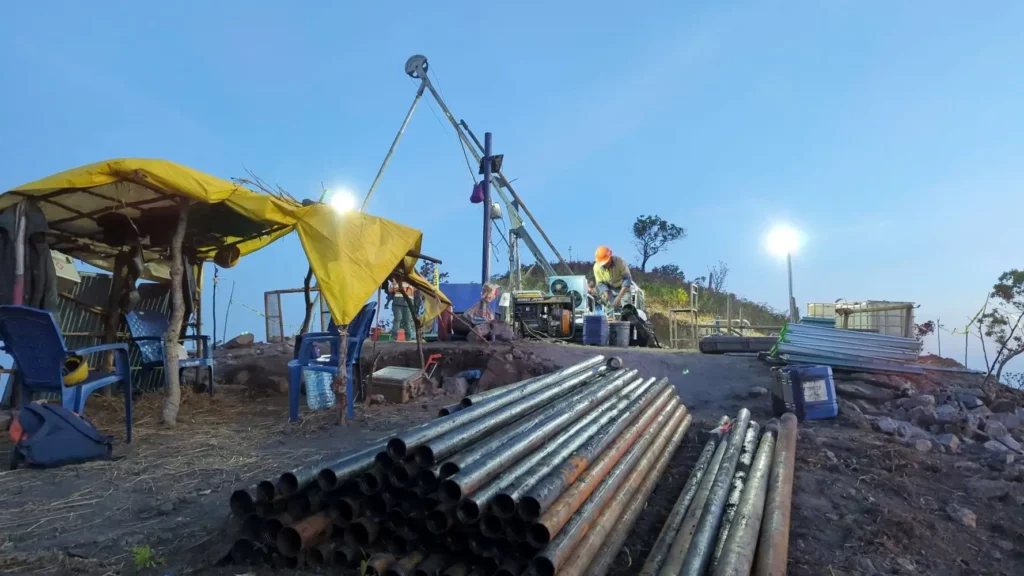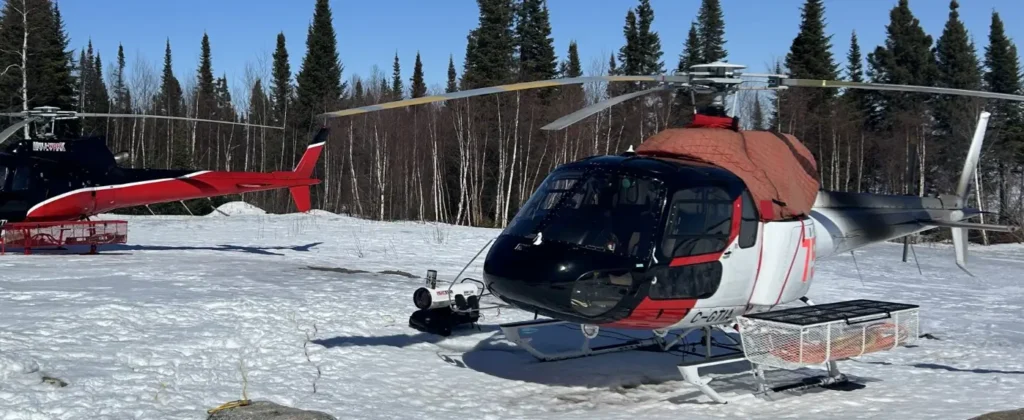

Max Resource (TSXV: MAX, FSE: M1D2) is making significant exploration progress at the Sierra Azul project in the Colombian Andean Belt. Recent field work in the AM District confirms that the manto-style copper-silver mineralisation extends significantly further than previously thought. With high-grade chip-channel samples over intervals ranging from 16 to 59 metres, the mineralised footprint has grown to more than 8 square kilometres. For the company, this is a crucial step towards translating the surface exploration to date into concrete drill targets.
Max Resource: Strong channel samples confirm extensive system
The current work is focused on zones AM13, AM15 and the newly identified zone AM16. Together, they now span an area of more than 4,000 by 2,000 metres. All three main targets lie within a radius of just two kilometres and feature comparable host rocks.
The results from continuous chip and saw channels demonstrate that the mineralisation is not limited to isolated occurrences, but consists of several bodies in close spatial proximity:
- Zone AM13: 59.0 m with 1.6% Cu & 7 g/t Ag | 50.0 m with 1.6% Cu & 6 g/t Ag | 31.0 m with 1.2% Cu & 6 g/t Ag
- Zone AM15: 19.0 m with 1.4% Cu & 8 g/t Ag | 16.0 m with 1.0% Cu & 3 g/t Ag
- Zone AM16: 20.7 m with 1.3% Cu & 6 g/t Ag | 16.0 m with 1.0% Cu & 5 g/t Ag
Geological model: Copper mineralization in volcanic rocks
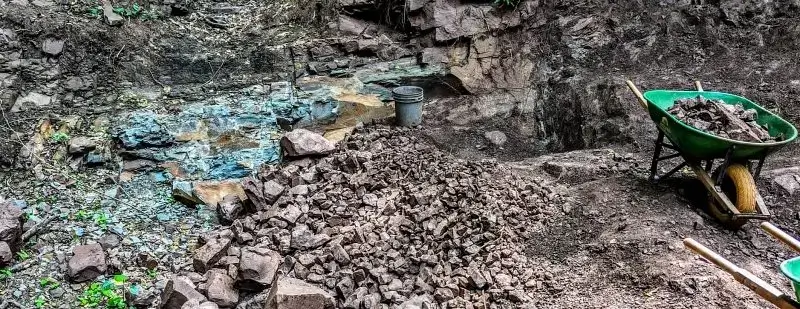
Geologically, Max Resource is focusing on stratiform copper systems in the AM District. The current peak values originate from the Manto system, which is hosted in volcanic rocks (andesite and dacite). The mineralisation is accompanied by alteration featuring chlorite, epidote and prehnite, with bitumen interpreted as a reducing factor for copper enrichment (bornite, chalcocite, and to a lesser extent chalcopyrite).
The volcanic sequences strike regionally between 40° and 50° and dip 60° to 80° to the north-west. The three zones have the following characteristics:
- AM13 (discovered in the Cedro Valley): Developed in a structurally prepared andesitic tuff.
- AM15 (1,300 m northwest of AM13): Mineralization (chalcocite, malachite, azurite) in fractures and vesicles of an andesitic tuff.
- AM16 (1,800 m west of AM13): Occurs in veinlets and cavities in andesite, agglomerate and breccias. Shows hydrothermal overprinting, a chalcocite-rich matrix, and epidote lenses with high native copper content.
Max Resource draws broad comparisons with the well-known El Soldado mine in central Chile for structural context but emphasises that this geological analogy does not allow for direct inferences regarding future size or grades.
The path to drill readiness and the Freeport earn-in
To derive a coherent three-dimensional model—and thus robust drill targets—from the surface discoveries, field teams are simultaneously investigating the vertical extent of the zones. Detailed soil and stream-sediment programs as well as mapping are intended to confirm the continuation of the lenses beneath the soil cover.
The strategic importance of Sierra Azul is underscored by the involvement of a global heavyweight: the project, wholly owned by Max Resource, is being funded by Freeport-McMoRan under an earn-in model. Freeport can secure up to 80% of the interest by covering cumulative exploration expenditures of US$50 million. These payments are continuing as planned, according to Max Resource.
In addition to the AM District, the Sierra Azul project also includes the CON and URU districts. Together, they extend over a strike length of around 100 kilometres in an NNE–SSW direction within the world’s most productive copper belt.